
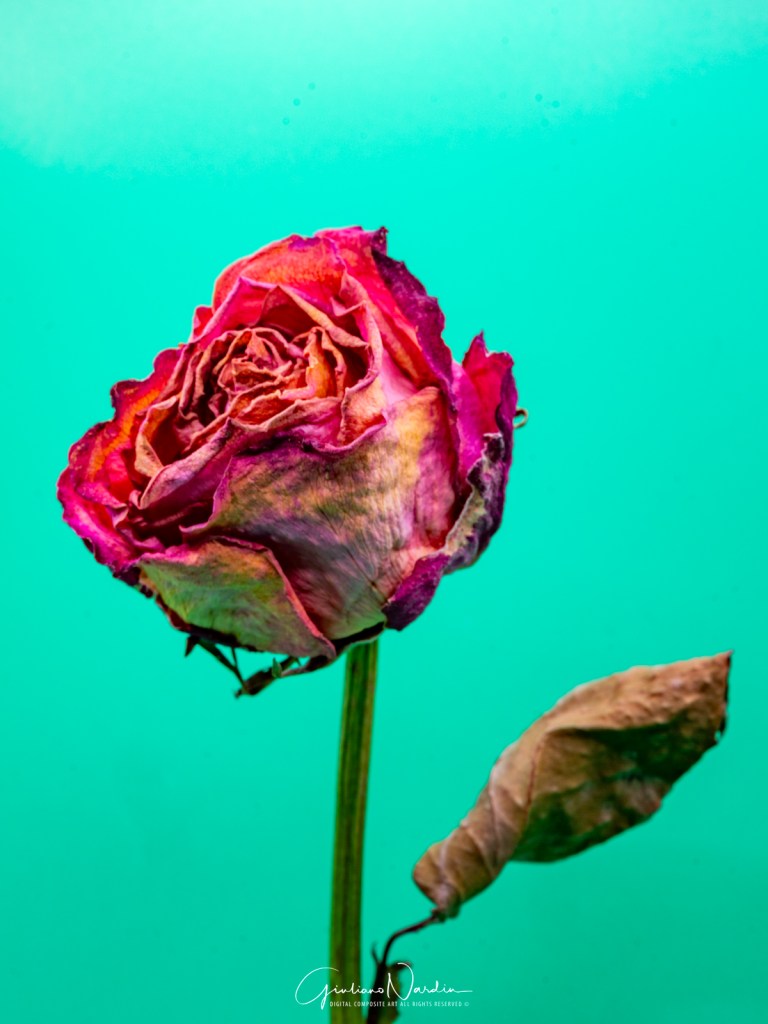
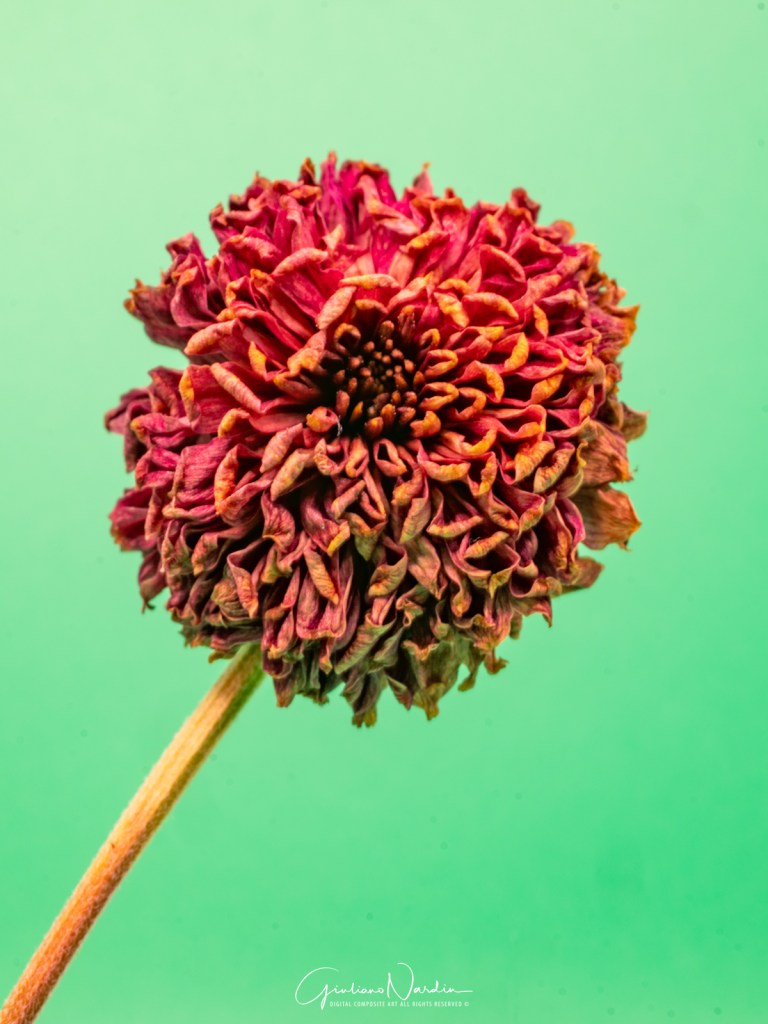
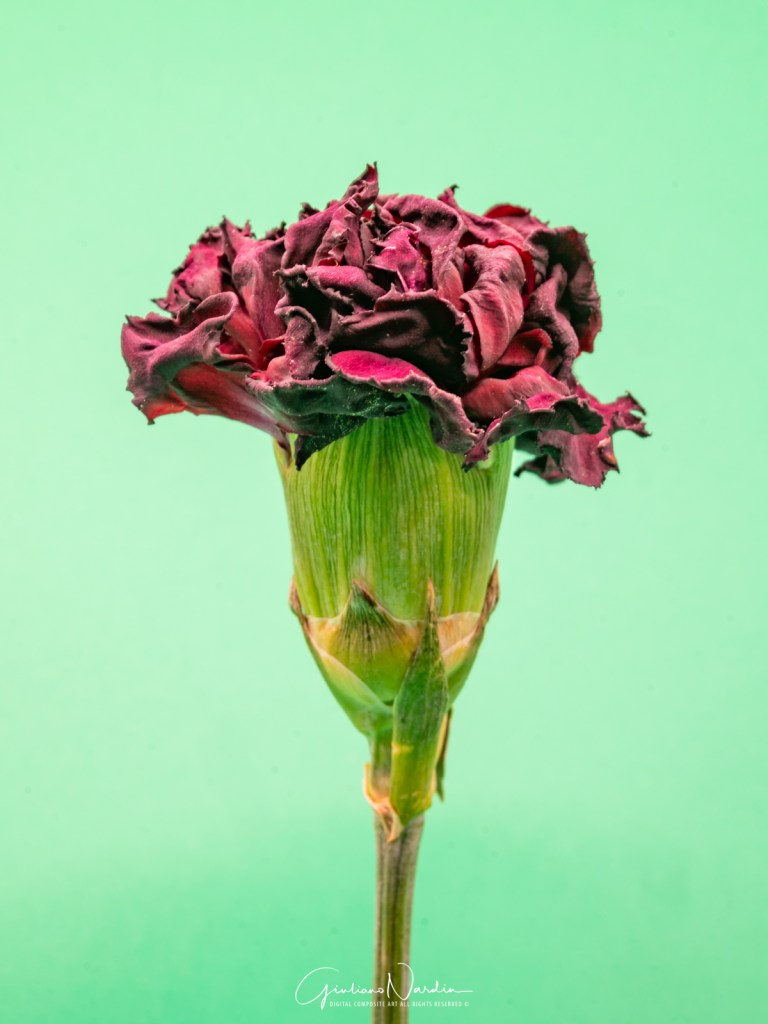
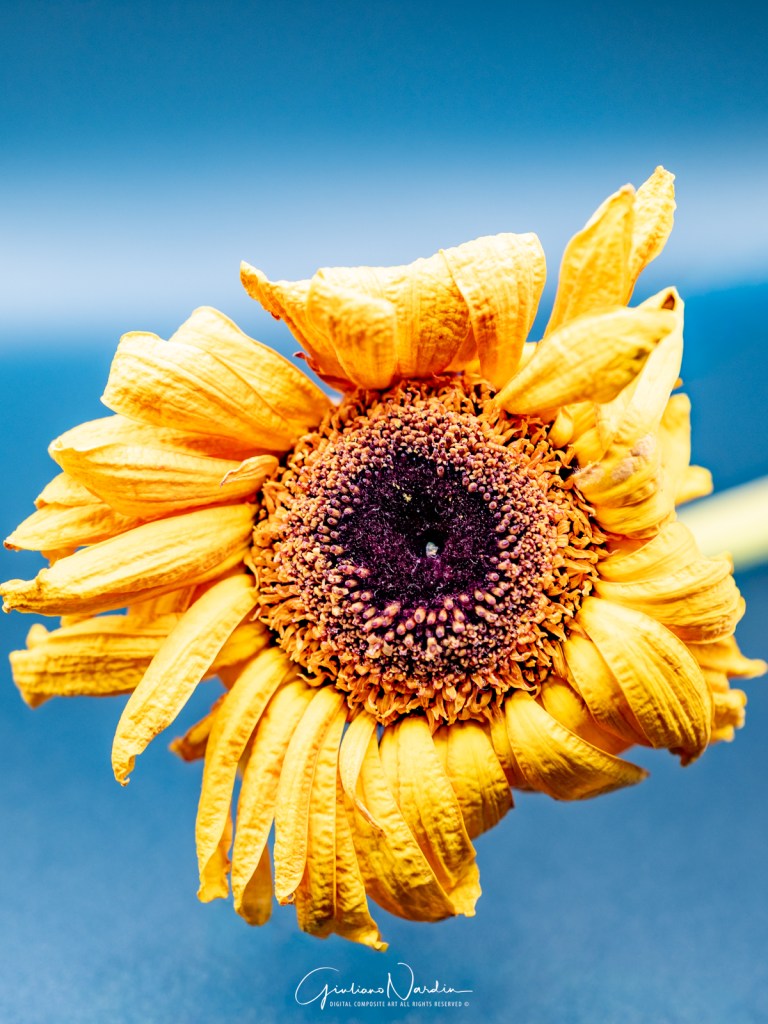
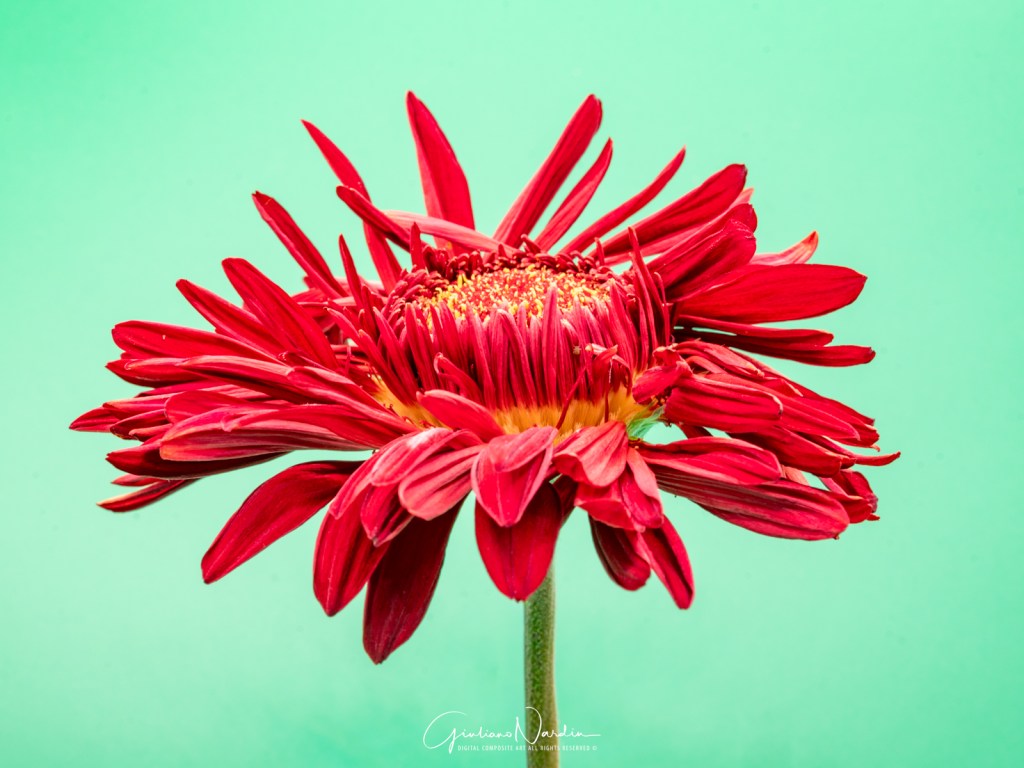
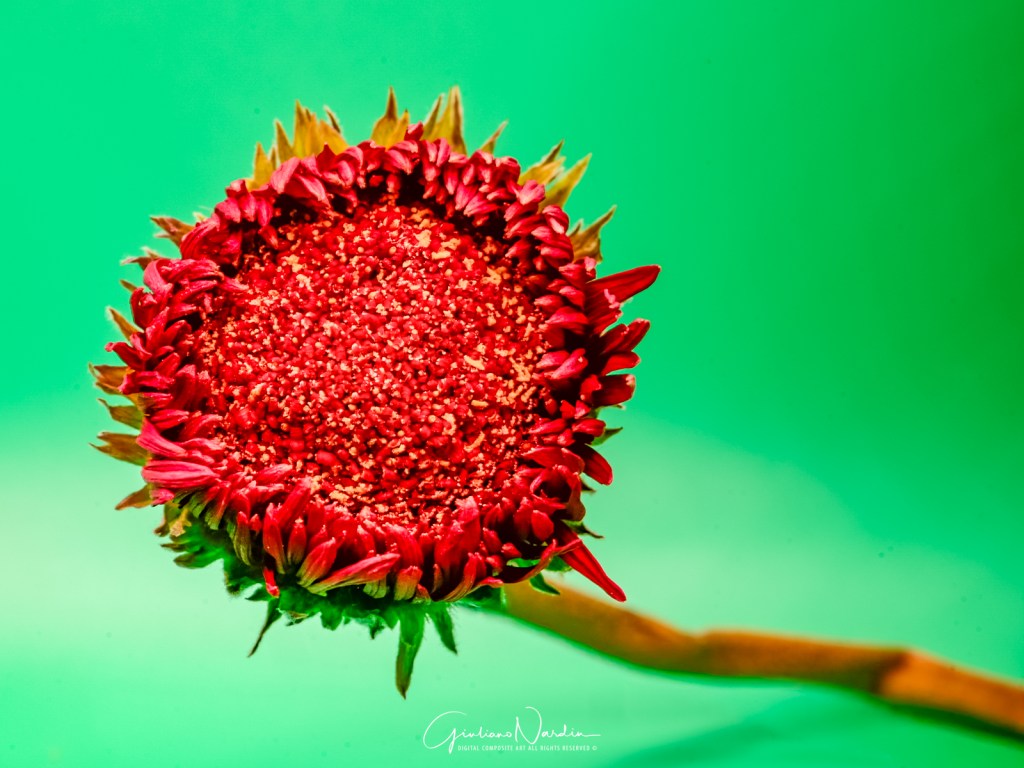
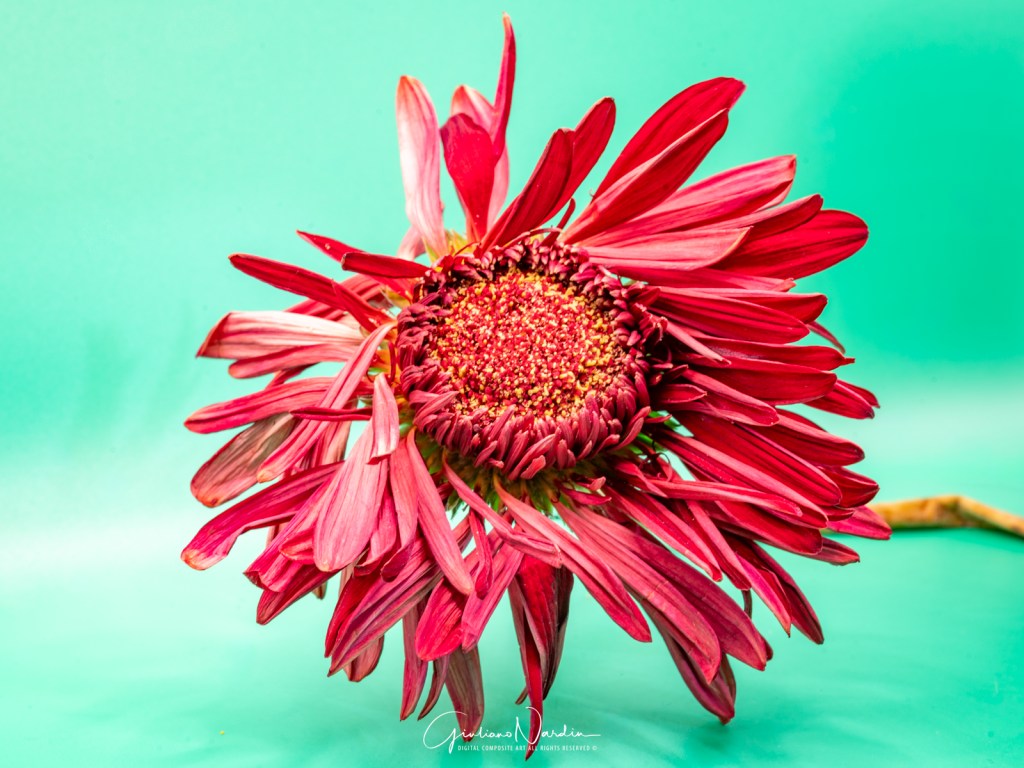
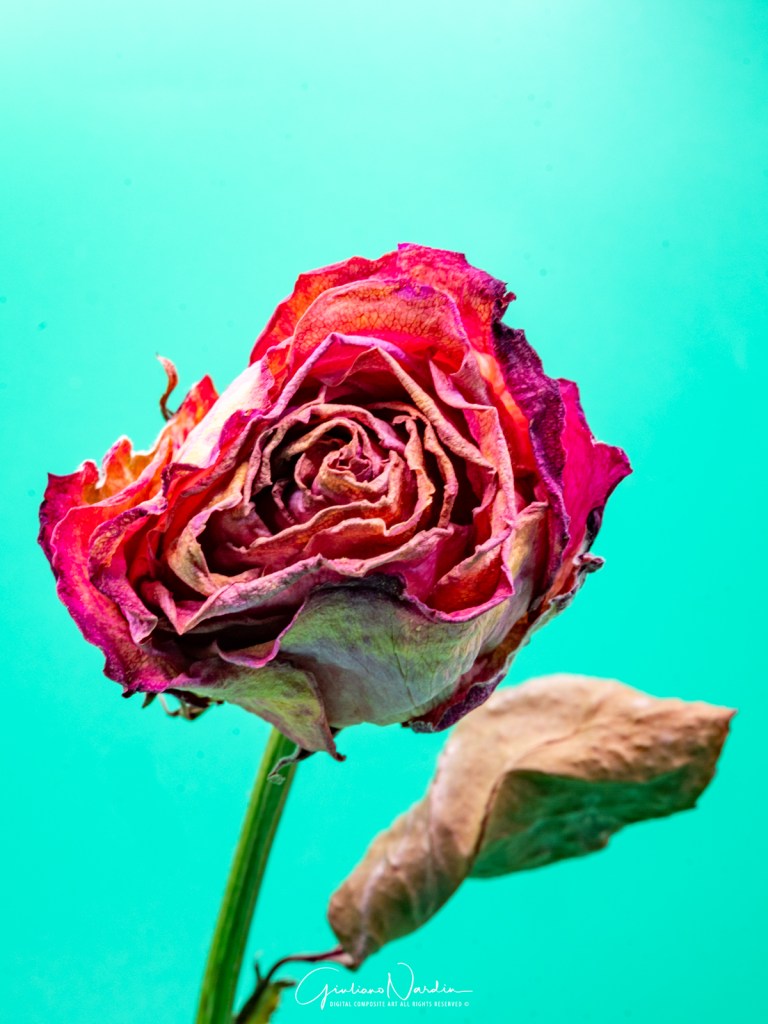
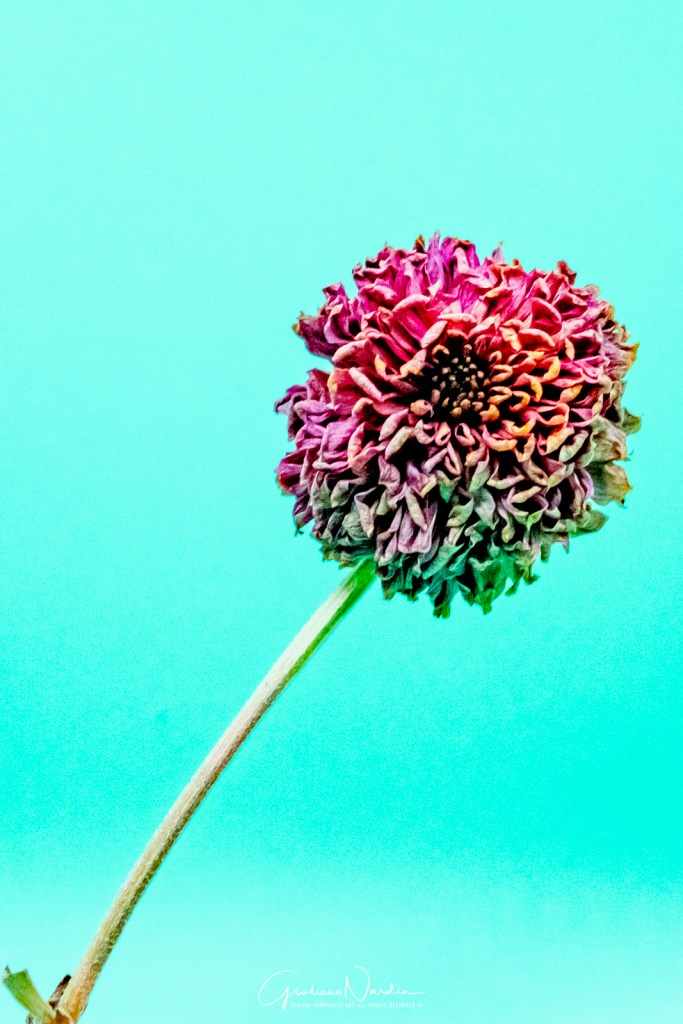
Questa galleria fotografica rappresenta un eccellente studio tecnico sulla texture e sulla gestione del colore in ambiente controllato. A differenza della classica macrofotografia naturalistica, che cerca la perfezione del fiore fresco, qui l’obiettivo si sposta sull’estetica della senescenza (l’invecchiamento del fiore).
Illuminazione e Micro-contrasto Dal punto di vista tecnico, la sfida principale in questi scatti è il lighting. I fiori secchi o appassiti assorbono la luce diversamente da quelli freschi; le superfici sono opache e increspate. L’illuminazione utilizzata (probabilmente morbida ma direzionale) è fondamentale per creare quel micro-contrasto che rivela la topografia dei petali avvizziti. Notate come le ombre non siano mai “chiuse”, ma servano a disegnare le pieghe e le venature, dando tridimensionalità al soggetto.
Cromatismo e Composizione L’uso di sfondi solid color (verde acqua e ciano) è una scelta compositiva vincente. Crea un contrasto cromatico netto, spesso complementare, con i toni caldi (rossi scuri, ocra, magenta) dei soggetti. Questo isolamento elimina ogni distrazione, costringendo l’occhio a analizzare i dettagli anatomici: la granulosità del polline centrale e la struttura fragile del calice.
In sintesi, questa serie dimostra come la tecnica macro, unita a un rigoroso controllo dello studio, possa trasformare il decadimento organico in un’opera grafica di forte impatto visivo e scultoreo.
🇬🇧 English Version
Beyond Freshness: Technical Analysis of Still Life Macro
This photo gallery represents an excellent technical study on texture and color management within a controlled environment. Unlike traditional nature macro photography, which seeks the perfection of a fresh bloom, the objective here shifts to the aesthetics of senescence (the aging of the flower).
Lighting and Micro-contrast From a technical standpoint, the main challenge in these shots is lighting. Dried or withered flowers absorb light differently than fresh ones; their surfaces are matte and crinkled. The lighting used (likely soft but directional) is crucial for creating the micro-contrast that reveals the topography of the shriveled petals. Notice how the shadows are never “blocked up” or crushed; instead, they serve to define the folds and veins, lending three-dimensionality to the subject.
Chromatism and Composition The use of solid color backgrounds (teal and cyan) is a winning compositional choice. It creates a sharp, often complementary chromatic contrast with the warm tones (dark reds, ochre, magenta) of the subjects. This isolation eliminates any distraction, compelling the eye to analyze the anatomical details: the granularity of the central pollen and the fragile structure of the calyx.
In summary, this series demonstrates how macro technique, combined with rigorous studio control, can transform organic decay into a graphic work of strong visual and sculptural impact.
🇫🇷 Version Française
Au-delà de la Fraîcheur : Analyse Technique de la Macro “Nature Morte”
Cette galerie de photos représente une excellente étude technique sur la texture et la gestion des couleurs dans un environnement contrôlé. Contrairement à la macrophotographie naturaliste classique, qui recherche la perfection de la fleur fraîche, l’objectif se déplace ici vers l’esthétique de la sénescence (le vieillissement de la fleur).
Éclairage et Micro-contraste D’un point de vue technique, le principal défi de ces clichés réside dans le lighting(l’éclairage). Les fleurs séchées ou fanées absorbent la lumière différemment des fleurs fraîches ; leurs surfaces sont mates et fripées. L’éclairage utilisé (probablement doux mais directionnel) est fondamental pour créer ce micro-contraste qui révèle la topographie des pétales flétris. Notez que les ombres ne sont jamais “bouchées”, mais servent plutôt à dessiner les plis et les nervures, donnant ainsi de la tridimensionnalité au sujet.
Chromatisme et Composition L’utilisation de fonds unis (vert d’eau et cyan) est un choix de composition gagnant. Elle crée un contraste chromatique net, souvent complémentaire, avec les tons chauds (rouges foncés, ocre, magenta) des sujets. Cet isolement élimine toute distraction, forçant l’œil à analyser les détails anatomiques : la granulosité du pollen central et la structure fragile du calice.
En résumé, cette série démontre comment la technique macro, alliée à un contrôle rigoureux du studio, peut transformer le déclin organique en une œuvre graphique au fort impact visuel et sculptural.

Devi effettuare l'accesso per postare un commento.